
Smart home design and programming.
You do the install.
Most people get here the same way: one system at a time, each one working fine on its own, none of them talking. Making them behave like a single system is a different job than installing them.
This is what I do: plan the systems and the integration you want, and get you direct access to the equipment. You do the physical install. From there I either program the system for you, or teach you to do it yourself so you are not working through manuals to get there, and you can maintain it and make changes on your own.
Programming files, wiring diagrams, and equipment records are handed over at the end, so you can make changes yourself rather than pay an installer to come back every time you want to adjust something or add a device. Nothing about your house depends on me being reachable in five years.
What I design and program
I take the parts that need dealer access and experience. You take the parts that need a drill.
It runs on hardware in your house
Everything I design runs on the manufacturer's own hardware and software. Lights, alarm, audio, and control keep working with the internet unplugged and with no third party in the loop. No cloud account, no subscription, no dependency on anyone maintaining an integration for free.
Four things do need a connection, and it is worth being precise about which: remote access from outside the house, alarm monitoring, weather driven automation, and voice assistants. Losing the internet does not mean losing the control system. It runs on your local network, so lights, shades, alarm, and music keep behaving exactly as programmed while the connection is down. Only the services built on top of it go quiet, and where that matters I help you plan a cellular backup so even those stay up.
The remotes became apps. The problem never left.
The 1980s coffee table had five remotes on it. TV, VCR, cable box, stereo, and one nobody could identify. The universal remote fixed that, and it worked, but the underlying problem never went anywhere: every new device still showed up with its own way of being controlled. Then everything moved onto smartphones. Between the apps, the ambient LEDs, the ceiling fans, the garage door opener, the doorbell camera, and the smart locks, the count did not just come back. It skyrocketed.
Lights in one app, shades in another, thermostat in a third, then locks, cameras, pool, alarm, music. Same pile, new glass, and now each one has its own login and its own opinion about what a button should look like. Nobody would hand you a house with nine remotes on the counter. Nine icons on a phone somehow reads as progress.
The phone also fails a test the old remote passed. Sat on your own couch you could find volume, channel, and mute blindfolded, because the buttons never move. Hand a phone to a guest and nothing happens until they unlock it, find the right icon, and already know how you organized it. A wall keypad has the virtue the remote had: fixed buttons, in the same place, that work without looking and that anyone can use without being taught.
The fix was never a better app. It is one button that does the whole thing at once. Goodnight drops the lights, closes the shades, sets the thermostat back, arms the alarm, and kills the TV, in one press, and the babysitter can use it.
The Home Technology Association argues the same thing at length, and they are not selling you anything: Do I buy a home control system or just use apps?
How a real system is designed →Whether anyone else in the house will touch it.
There is an old joke in this trade about the wife acceptance factor. It is a joke because it is true. A system only one person in the house knows how to drive is a hobby, and everyone else quietly goes back to the wall switch.
What good feels like is quieter than the brochures suggest. Dinner is one press: lights down to the right level, shades closed against the dark, music on in the kitchen and dining room at a volume you can still talk over. Movie night is another. Nobody in the room is thinking about equipment, or about how any of it got there. It just works, and the evening is the only thing anyone is paying attention to.
Audio is the part people underestimate. Whole house music done properly means one source, real volume control in each room, and the same speakers carrying the film at night and the playlist you put on while cooking. Done with apps it means opening one app for the speakers, another for the receiver, and giving up.
Voice sits on top of all of it. Siri, Alexa, and Google earn their place once there is a real system underneath, because then goodnight can mean nine things happening at once rather than one bulb changing color. Without that, voice is just one more remote whose magic words you have to remember.
So the test is simple. Can your ten year old dim the kitchen? Can your mother turn the news on without phoning you? Can your wife put music on in the bathroom without hunting for her phone? Get that right and the house gets used. Get it wrong and you have an expensive light switch.
Judge the work directly
Anyone can write a testimonial. Nineteen years of my technical answers are public, searchable, and posted under my own name, so you can judge how I think about this work before you ever call me.
RTI ran a driver I wrote on a touchpanel at their own booth at the CEDIA Expo, the trade show where the control system manufacturers show what their platforms can do.
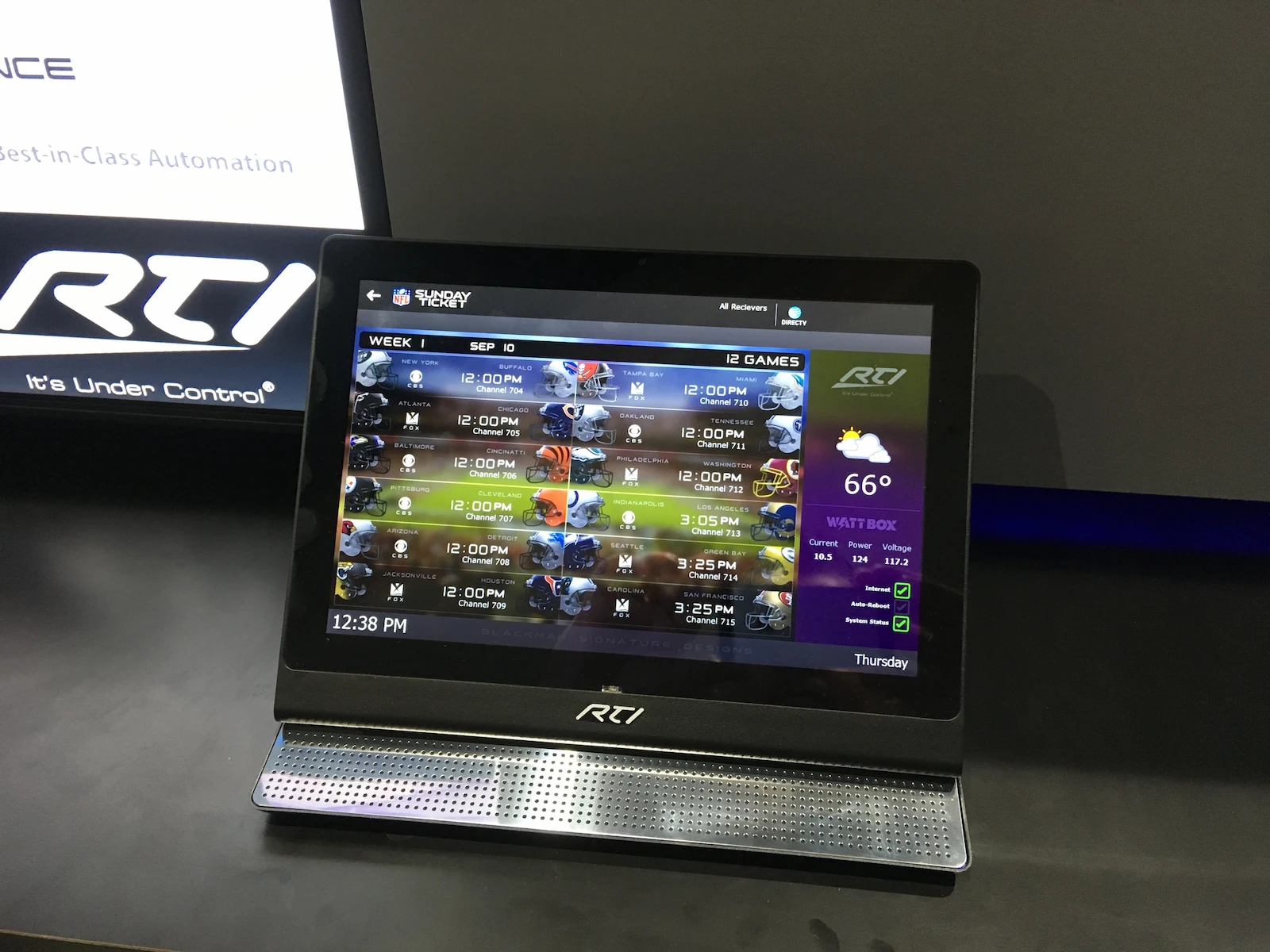 MY SUNDAY TICKET DRIVER AT THE RTI BOOTH, CEDIA EXPOSee the drivers I have written →
Nineteen years of answers
I have been a member of the Universal Devices community since 2007, with roughly 2,600 posts answering lighting, automation, and security integration questions.
You can see my profile here.High end custom homes
Systems specified and integrated on large custom builds, where leak detection, automatic shutoff, and whole house control are standard rather than upgrades. That is where most of my checklist comes from.
Eight RTI drivers
Plugins I wrote so an RTI processor can control equipment it does not support out of the box. Other dealers trust these plugins enough to run them in their own client installs.
See the listThe entry point, not the pitch
Lutron RA3, HomeWorks, and RTI are just a few of the brands that require an authorized dealer. I am one, so you can buy them from me and install them yourself. Equipment ships direct to you, and because there is no warehouse, showroom, or install crew behind me, none of that overhead is carried in the hardware. For ELK and other lines, dealer pricing and direct manufacturer support mean better equipment costs and real backup when something does not work.
There is a second reason this matters, and it is the one people find out about too late. Buy Lutron or RTI from a random online listing and you may have no warranty at all. RTI says plainly that products sold through online retailers are not covered by any warranty and are not eligible for service or support, and that the factory warranty does not transfer, so a used unit is not covered either. Lutron reserves the right to reject warranty claims on products bought from unauthorized sellers, and its commercial warranty excludes auction sites and second hand purchases outright.
Bought through me, it is a normal first party purchase: full manufacturer warranty, eligible for service, with real support standing behind it.
Access gets the boxes to your door. What happens after that is the actual job.
The lines I carry →Ready to get started?
Describe what you want the house to do. I will tell you honestly whether it is worth doing.